Description
Molar mass: 209.94 g/mol
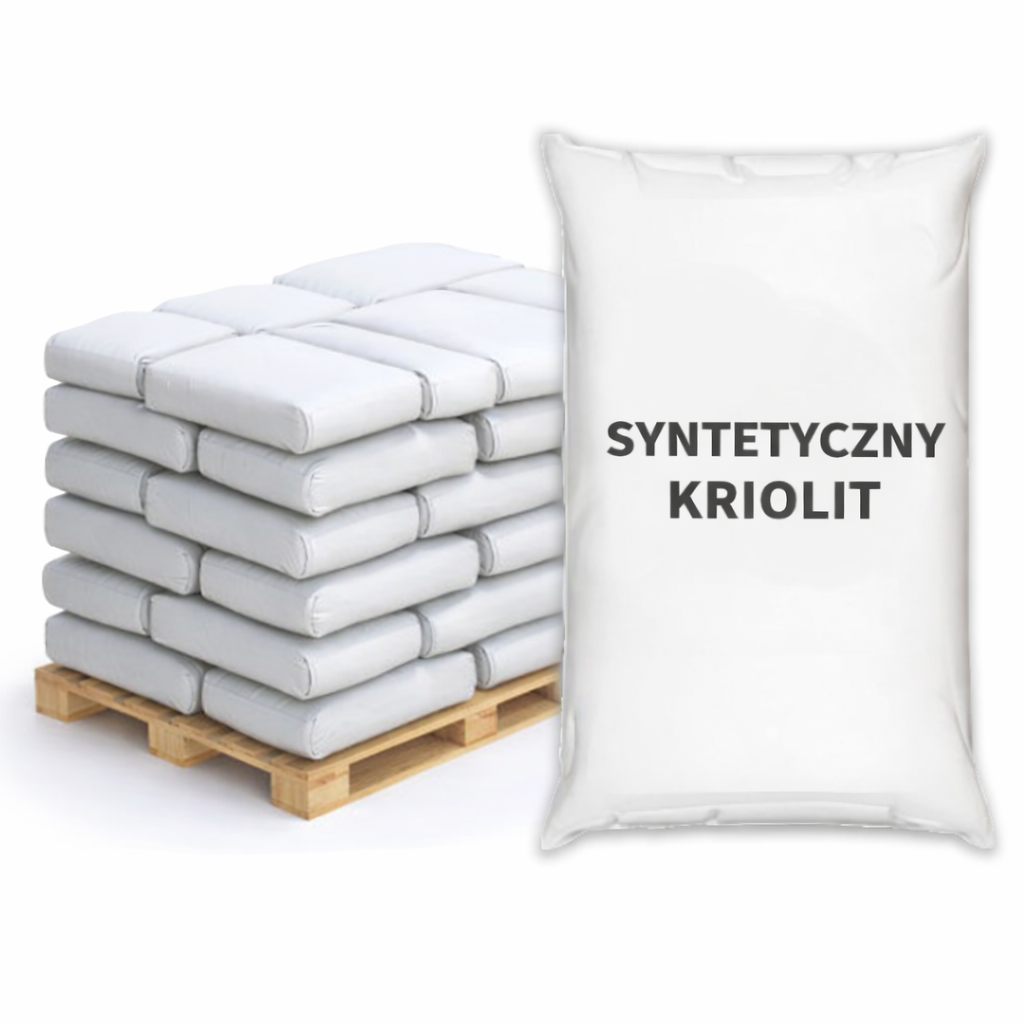
Synthetic cryolite is a high-purity inorganic sodium aluminium fluoride used as a primary electrolyte in metallurgical processes. The product is characterized by stable physicochemical properties and very good solubility of alumina in the molten state.
The compound exhibits high thermal stability and ionic conductivity, enabling a significant reduction in the operating temperature of the aluminium electrolysis process. At the same time, it improves the energy efficiency of the process and enhances the stability of the electrolytic bath.
Sodium fluoroaluminate is supplied as a white, free-flowing powder with low moisture content and controlled particle size distribution, ensuring easy dosing, transport, and storage.
Market
Synthetic cryolite is a key raw material used in primary aluminium smelting. Product consumption is directly linked to global aluminium production volumes; therefore, demand remains stable and shows growth potential in line with the development of the transport, energy, and packaging industries.
The main customers are aluminium smelters and manufacturers of electrolytic materials and metallurgical fluxes. Additionally, the product is used in the abrasive, ceramic, and glass industries as an additive modifying the physicochemical properties of materials.
Due to the depletion of natural cryolite deposits, the entire market is currently based on synthetic production, ensuring consistent quality, repeatable parameters, and reliable supply continuity.
Applications
Synthetic cryolite is primarily used in the aluminium industry as a component of the electrolyte in electrolytic aluminium production, where it lowers operating temperature, improves bath electrical conductivity, and stabilizes the technological process.
In light metals metallurgy, it is also used as a flux in soldering, welding, and aluminium refining, as it facilitates the removal of oxide layers from metal surfaces and improves joint quality.
In the ceramic and glass industries, it functions as a modifying additive for glazes and enamels, enhancing smoothness, gloss, and chemical resistance.
In the production of abrasives and refractory materials, it serves as a component regulating sintering temperature and material structure.
Furthermore, sodium aluminium fluoride is used in the chemical industry as a component of certain fluxes and technological preparations applied in metal surface treatment processes.