Description
Molecular weight: 174.45 g/mol
pH: 1.0 ± 0.2
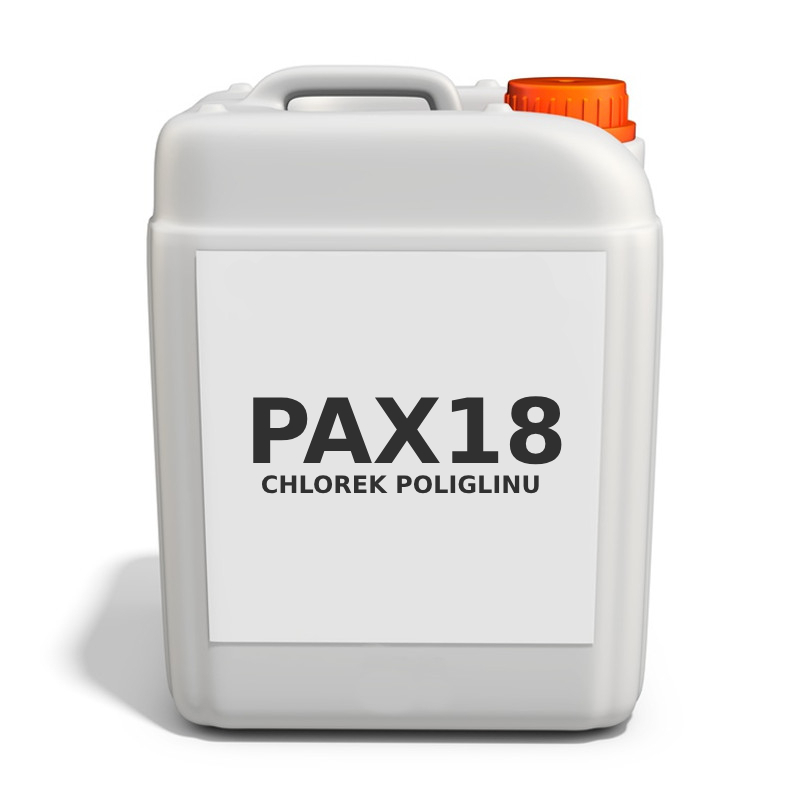
Polyaluminium chloride PAX 18 is an inorganic coagulant used in water treatment and wastewater purification processes. It is an aqueous solution of multivalent aluminum compounds (Al³⁺) that effectively supports coagulation and flocculation processes, leading to the removal of contaminants. Due to its high efficiency and stability, it is widely used in drinking water treatment as well as in various industrial applications.
Polyaluminium chloride PAX 18 is produced through a chemical reaction between aluminum hydroxide and hydrochloric acid under controlled conditions. This synthesis results in a polymeric aluminum structure, which enhances coagulation efficiency compared to traditional coagulants such as aluminum sulfate.
Many variants of polyaluminium chloride are available on the market, differing in aluminum concentration and basicity, allowing optimization for specific water treatment processes.
APPLICATIONS
Polyaluminium chloride PAX 18 is widely used in drinking water treatment, where it effectively removes organic and inorganic contaminants, improves clarity, and reduces phosphate levels.
In municipal and industrial wastewater treatment, it helps reduce turbidity, remove suspended solids, and decrease sludge volume.
In the paper industry, it stabilizes solid particle suspensions and improves the quality of the final product.
It is also used in the restoration of water reservoirs by limiting algae growth and improving surface water quality.
PRECAUTIONARY MEASURES
Polyaluminium chloride (PAX 18) is an acidic substance (pH ~1) and therefore requires careful handling.
| Type of Contact | First Aid Measures |
|---|---|
| Skin contact | May cause mild irritation, especially after prolonged contact. The use of protective gloves is recommended. |
| Eye contact | May cause tearing and irritation. In case of contact, rinse with water for at least 10 minutes and consult a doctor. |
| Inhalation | May irritate the respiratory tract. Work in well-ventilated areas is recommended. |
| Ingestion | May cause gastrointestinal disturbances. In case of ingestion, contact a doctor immediately. |
HAZARD STATEMENTS
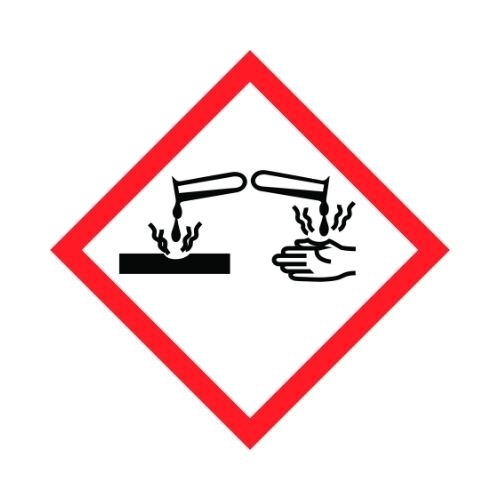
| Category | Code and description |
|---|---|
| Hazard statements | H290 – May be corrosive to metals.
H318 – Causes serious eye damage. |
| Precautionary statements | P261 – Avoid breathing dust/fume/gas/mist/vapours/spray.
P280 – Wear protective gloves/protective clothing/eye protection. P264a – Wash hands thoroughly after use. P305+P351+P338 – IF IN EYES: Rinse cautiously with water for several minutes. Remove contact lenses, if present and easy to do. Continue rinsing. P310 – Immediately call a POISON CENTER/doctor. P406 – Store in a corrosion-resistant container with a resistant inner lining. |