
Description
Molecular weight: 62.02 g/mol
Solution reaction (pH): 5.1 (0.1 M aqueous solution)
Boric acid (H₃BO₃), also called boracic acid, is an inorganic chemical compound classified as a weak non-oxidizing acid. It occurs naturally in minerals such as sassolin, as well as in thermal waters and some plants. It is widely used in medicine, cosmetics, the chemical industry, agriculture, and pharmacy.
Under standard conditions, it occurs in the form of white, shiny crystals or powder, well soluble in water. It is known for its antiseptic, preservative, and stabilizing properties, thanks to which it has found application in many industries.
APPLICATION
Boric acid is widely used in various industries. In medicine and pharmacy, it is used as an antiseptic and antifungal agent, applied in the treatment of superficial skin infections and inflammations of mucous membranes. Examples of products available on the Polish market are Borasol, which is a solution for use on the skin, and Borna Ointment. In cosmetics and personal hygiene, boric acid serves as an ingredient of creams, tonics, shampoos, as well as antiperspirants and deodorants, due to its antibacterial and preservative properties.
In the chemical industry and glass production, boric acid is used for the manufacture of borosilicate glass, enamels and ceramic glazes, as well as a catalyst in various chemical syntheses. In agriculture and plant protection, it functions as a source of boron in mineral fertilizers, supporting plant growth and development. An example of a fertilizer product containing boric acid is Boric Acid B 18% offered by the company Agrosimex.
In the metallurgical industry, boric acid is used as a flux in soldering and welding processes, as well as in steel hardening. Additionally, it is used in the production of insecticides, where it serves as a component of preparations for controlling insects such as ants and cockroaches.
PRECAUTIONARY MEASURES
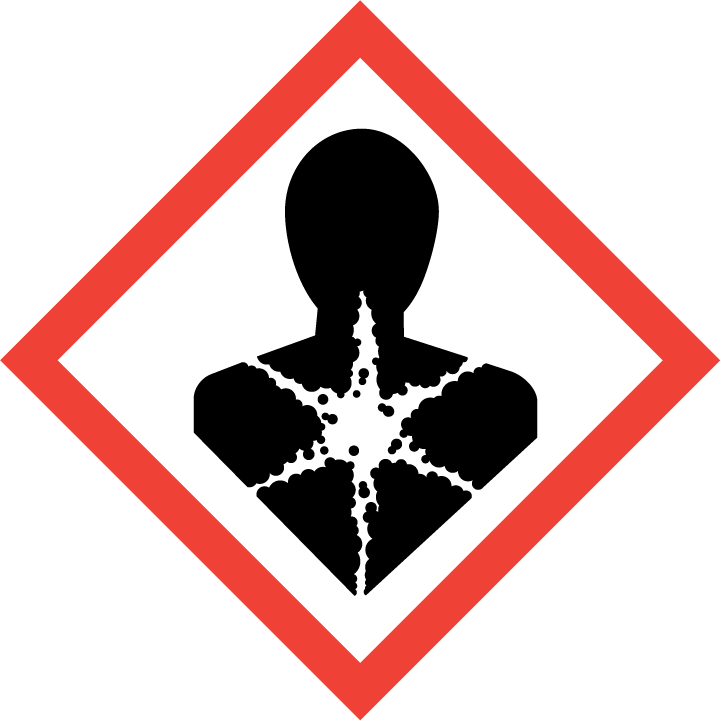
According to Regulation (EC) No 1272/2008 (CLP), boric acid is classified as a substance that may damage fertility and the unborn child (H360FD), causes eye irritation (H319), and may cause respiratory tract irritation (H335).
| Category | Description |
|---|---|
| General notes | Do not leave the injured person unattended. Remove the injured person from the danger area. Keep the injured person covered and warm. Immediately remove all contaminated clothing. Seek medical advice in case of any doubts or if symptoms persist. In case of unconsciousness, place the person in the recovery position. Never give anything by mouth. |
| After inhalation exposure | Move the injured person to fresh air and ensure free access to oxygen. If cough, breathing difficulties, or respiratory irritation occur, consult a doctor. In case of apnea or irregular breathing, immediately call medical assistance. |
| After skin contact | Rinse the skin thoroughly with plenty of running water. Remove contaminated clothing and rinse it before reuse. In case of irritation or allergic reaction, consult a doctor. |
| After eye contact | Rinse abundantly with clean, fresh water for at least 10 minutes, keeping the eyelids open. Remove contact lenses if present and easy to do. Continue rinsing. Immediately contact an ophthalmologist. |
| After ingestion exposure | Rinse mouth with water (only if the injured person is conscious). Do not induce vomiting. Immediately consult a doctor and provide information about the ingested substance. |
| Indications regarding any immediate medical attention and special treatment of the injured person | Symptomatic treatment. |
HAZARD CODES
| Category | Code and description |
|---|---|
| Hazard statements | H290 May cause corrosion of metals. |
| Precautionary statements | P234 Keep only in original container. P280 Wear protective gloves/protective clothing/eye protection. P301+P330+P331 IF SWALLOWED: Rinse mouth. Do NOT induce vomiting. |